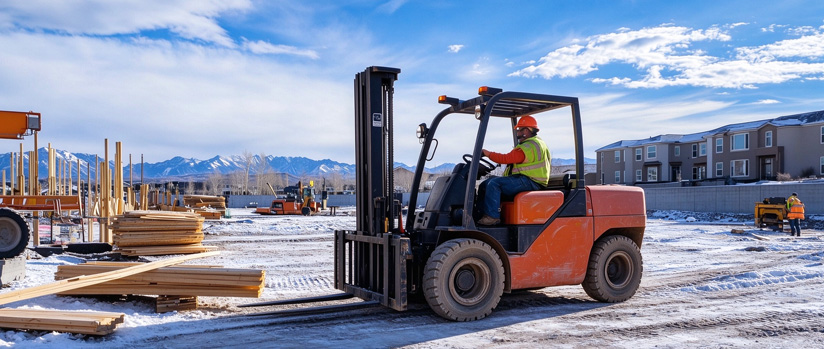
Cold weather can significantly affect forklift performance, battery efficiency, hydraulic systems, tire traction, and overall operating safety. Without proper preparation, minor maintenance issues can quickly develop into unexpected breakdowns during the winter operating season.
Ideally, begin winter preparation 4–6 weeks before the first expected frost. This provides enough time to inspect critical components, replace worn parts, and arrange necessary spare parts without interrupting daily operations.
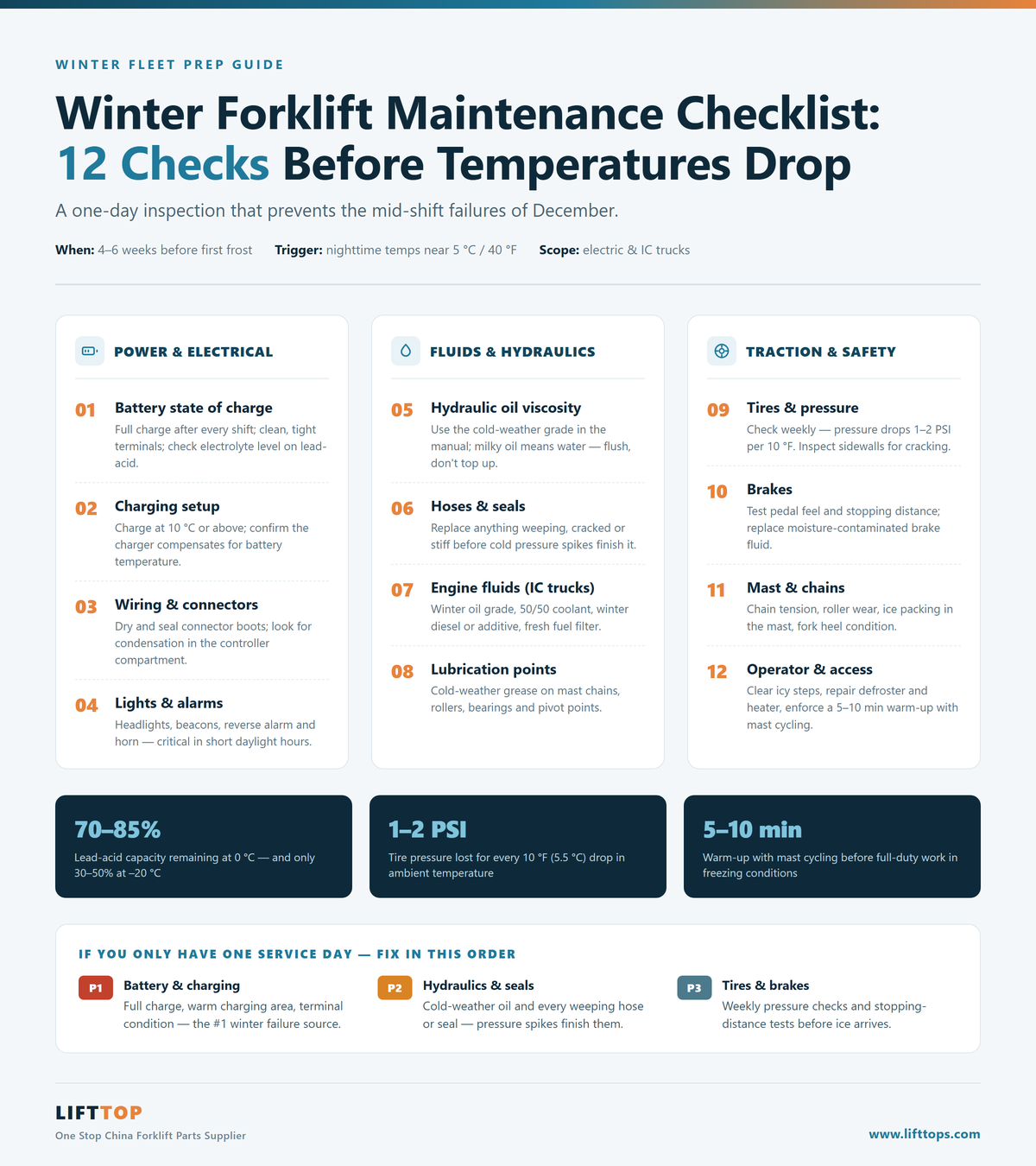
This guide covers 12 essential winter maintenance checks across four key areas: battery and electrical systems, fluids and hydraulics, tires and mechanical components, and operator safety equipment.
Use the following checklist to inspect your forklift fleet before winter begins.
The battery is one of the most important components to inspect before winter, especially on electric forklifts.
What to check:
Battery state of charge (SOC).
Battery terminals and cable connections.
Electrolyte level in applicable lead-acid batteries.
Battery casing for cracks, swelling, or leakage.
Battery performance and charging history.
Warning signs:
Corroded battery terminals.
Reduced operating time.
Battery voltage dropping rapidly under load.
Battery failing to reach a full charge.
Recommended action:
Fully charge lead-acid batteries according to the manufacturer's charging instructions and avoid leaving them discharged for extended periods.
Check electrolyte levels where applicable and clean battery terminals to maintain reliable electrical connections.
For lithium-ion batteries, verify that the battery management system (BMS) is functioning correctly and that the battery's low-temperature protection features are working.
A battery can lose performance in winter even when the battery itself is in good condition. Charging equipment and charging conditions also matter.
What to check:
Charger output voltage and current.
Charging cable and connector condition.
Charging indicators and error codes.
Temperature compensation settings for applicable lead-acid chargers.
Charging environment and ventilation.
Warning signs:
Incomplete charging cycles.
Charger overheating or displaying error codes.
Loose or damaged connectors.
Charging interruptions in low-temperature environments.
Recommended action:
Follow the battery manufacturer's recommended charging temperature range.
Whenever possible, charge batteries in a suitable temperature-controlled area. For lithium batteries, ensure that the BMS prevents charging below the permitted cell temperature or activates an approved battery heating system.
Inspect charger connectors regularly and replace damaged cables or plugs.
Cold weather, moisture, and condensation can contribute to electrical problems.
These issues may affect forklift controllers, contactors, switches, sensors, and other electrical components.
What to check:
Wiring harnesses and cable insulation.
Electrical connectors and terminals.
Controller compartments.
Contactor connections.
Signs of moisture or corrosion.
Warning signs:
Intermittent electrical faults.
Loose connectors.
Green corrosion on terminals.
Cracked insulation or damaged connector boots.
Recommended action:
Clean and inspect electrical connections, replace damaged wiring, and ensure connector seals are properly fitted.
Check that electrical enclosures and connector protection meet the equipment manufacturer's requirements.
Shorter daylight hours and poor winter weather increase the importance of forklift visibility and warning systems.
What to check:
Headlights and work lights.
Rear lights.
Warning beacons.
Reverse alarms.
Horns and other audible warning devices.
Warning signs:
Dim or non-functioning lights.
Damaged lamp housings.
Silent or inconsistent warning alarms.
Recommended action:
Replace defective lights and repair faulty warning devices before winter operations begin.
Test all safety equipment during daily pre-shift inspections.
Hydraulic systems are particularly sensitive to low temperatures.
Cold hydraulic oil becomes thicker, increasing resistance and potentially affecting pump efficiency and mast response.
What to check:
Hydraulic oil grade and viscosity.
Oil level.
Oil color and appearance.
Signs of water contamination.
Hydraulic pump noise and mast response.
Warning signs:
Slow lifting or lowering.
Unusual pump noise.
Milky or cloudy hydraulic oil.
Jerky mast movement.
Recommended action:
Use the hydraulic oil grade specified by the forklift manufacturer for the expected operating temperature.
Do not select a lower-viscosity oil without checking the equipment specifications.
If the oil appears milky, investigate possible water contamination and follow the manufacturer's recommended draining and flushing procedures.
Allow the hydraulic system to warm up gradually before operating under heavy loads.
Low temperatures can make aging rubber hoses and seals less flexible.
Components that already show signs of wear may develop leaks when exposed to cold-weather operating conditions.
What to check:
Hydraulic hoses and fittings.
Lift cylinder seals.
Tilt cylinder seals.
Hose connections.
Visible hydraulic leakage.
Warning signs:
Cracked or hardened hoses.
Oil around cylinder rods.
Wet fittings or leaking connections.
Damaged protective covers.
Recommended action:
Replace damaged hoses and worn seals before winter operations begin.
Pay particular attention to hydraulic hoses exposed to repeated bending and vibration.
Never inspect hydraulic leaks by hand while a system is pressurized. Follow proper lockout and pressure-release procedures before maintenance.
Diesel and LPG forklifts require additional winter preparation.
Low temperatures can affect engine starting, lubrication, fuel delivery, and cooling systems.
What to check:
Engine oil viscosity.
Coolant concentration and freezing protection.
Fuel filter condition.
Diesel fuel suitability for low temperatures.
Engine starting performance.
Warning signs:
Difficult cold starts.
Unusual engine noise.
Coolant leaks.
Fuel filter blockage.
Poor engine performance.
Recommended action:
Use engine oil suitable for the expected operating temperature and follow the manufacturer's viscosity recommendations.
Check coolant concentration with an appropriate tester to confirm adequate freeze protection.
For diesel forklifts, use winter-grade diesel where required by local conditions and fuel specifications. Inspect fuel filters and follow the engine manufacturer's cold-weather recommendations.
Cold weather can affect the performance of lubricants, particularly in components exposed to moisture and outdoor conditions.
What to check:
Mast chains.
Mast rollers.
Bearings.
Pivot points.
Moving joints.
Warning signs:
Stiff movement.
Dry or rusty chain links.
Unusual mechanical noise.
Restricted mast movement.
Recommended action:
Use lubricants approved by the forklift manufacturer for the operating temperature and application.
Clean components before lubrication and pay particular attention to areas exposed to water, snow, and road salt.
Avoid over-lubricating components where excess grease may attract dirt or interfere with normal operation.
Tire condition directly affects forklift stability, traction, and braking performance.
Cold weather can reduce pneumatic tire pressure, while solid and press-on tires may become less flexible depending on their rubber compound.
What to check:
Pneumatic tire pressure.
Tread condition.
Sidewall cracks.
Uneven wear.
Flat spots and visible damage.
Warning signs:
Tire pressure below specification.
Cracked sidewalls.
Excessive tread wear.
Reduced traction on wet or icy surfaces.
Recommended action:
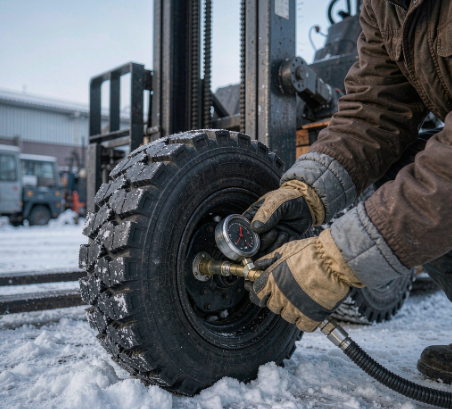
Check pneumatic tire pressure weekly during winter and adjust it according to the forklift manufacturer's specifications.
Replace tires with serious cracks, excessive wear, or structural damage.
For solid tires and press-on tires, inspect tread condition and rubber deterioration.
If forklifts operate outdoors in snowy or icy conditions, evaluate suitable tire options or traction aids based on the truck manufacturer's recommendations.
Moisture, dirt, and corrosion can affect braking performance, particularly on forklifts operating outdoors.
What to check:
Brake pedal response.
Parking brake operation.
Brake shoes and drums, where applicable.
Brake lines and hydraulic connections.
Brake fluid condition, on systems that use brake fluid.
Warning signs:
Longer stopping distances.
Abnormal brake noise.
Uneven braking.
Spongy pedal response.
Visible leakage.
Recommended action:
Inspect and repair worn or damaged brake components.
For hydraulic brake systems, check fluid condition and replace moisture-contaminated fluid according to the manufacturer's service schedule.
Remove accumulated ice, mud, and debris from relevant mechanical components.
The mast assembly is essential for safe lifting and material handling.
Winter conditions can introduce additional moisture, ice, and corrosion that affect moving components.
What to check:
Lift chain condition and adjustment.
Mast roller wear.
Fork heel condition.
Fork locking mechanisms.
Ice or debris around the mast.
Warning signs:
Uneven lifting.
Abnormal chain movement.
Worn rollers.
Cracks or deformation around fork heels.
Restricted mast movement.
Recommended action:
Inspect chains and rollers according to the manufacturer's maintenance requirements.
Replace damaged or excessively worn components and remove accumulated ice or debris before operation.
Never operate a forklift with damaged forks or an unsafe lifting mechanism.
Winter maintenance is not limited to mechanical components. Operator comfort and visibility are equally important.
What to check:
Access steps and handholds.
Cab heater.
Windshield defroster.
Windscreen and mirrors.
Operator protective equipment.
Emergency and safety equipment.
Warning signs:
Icy or slippery access steps.
Fogged windows.
Defective heaters or defrosters.
Poor visibility.
Operators experiencing difficulty during cold starts.
Recommended action:
Clean and treat access steps with suitable anti-slip materials.
Repair defective heaters and defrosters, and ensure operators have appropriate cold-weather protective equipment.
Follow the manufacturer's startup procedure and allow the forklift to warm up as recommended before full-load operation.
For forklift distributors, maintenance workshops, and fleet operators, winter preparation also means ensuring that frequently needed replacement parts are available.
The following components deserve particular attention.
| Spare Part | Why It Matters in Winter | Stocking Recommendation |
|---|---|---|
| Forklift batteries and chargers | Reduced battery capacity and charging difficulties | Prepare compatible backup batteries and chargers for critical equipment |
| Hydraulic hoses and seal kits | Aging rubber components may develop leaks | Stock frequently used hose sizes and seal kits |
| Drive wheels and load wheels | Rubber deterioration and traction issues | Maintain replacement inventory for commonly used forklift models |
| Brake components | Wear, moisture, and corrosion can affect braking performance | Stock frequently replaced brake shoes and wheel cylinders where applicable |
| Contactors and controllers | Electrical faults and damaged connections can interrupt operation | Identify compatible replacement components for major truck models |
| Lights and warning alarms | Reduced daylight increases the importance of visibility | Maintain commonly used lights, beacons, and alarms |
| Grease and filters | Seasonal lubrication and engine maintenance | Prepare manufacturer-approved lubricants and replacement filters |
The right spare parts inventory depends on fleet size, equipment models, operating conditions, and local supplier lead times.
For maintenance workshops and distributors, preparing a parts list before winter can help reduce emergency procurement and unexpected equipment downtime.
Different forklift power systems require different winter maintenance priorities.
| Component | Electric Forklifts | Internal Combustion Forklifts |
|---|---|---|
| Power source | Lead-acid or lithium battery | Diesel or LPG engine |
| Battery maintenance | Battery condition, charging, and temperature protection | Starting battery and electrical connections |
| Charging or starting | Charger compatibility and charging temperature | Cold-start performance |
| Fluids | Hydraulic oil and approved lubricants | Engine oil, coolant, fuel, hydraulic oil |
| Electrical components | Controllers, contactors, connectors | Starting system, wiring, sensors |
| Additional checks | BMS and battery heating where equipped | Fuel filters and cold-weather fuel suitability |
Both types require regular inspection of tires, brakes, hydraulic systems, mast components, and operator safety equipment.
A maintenance plan should always reflect the forklift's power system, operating environment, and manufacturer's service recommendations.
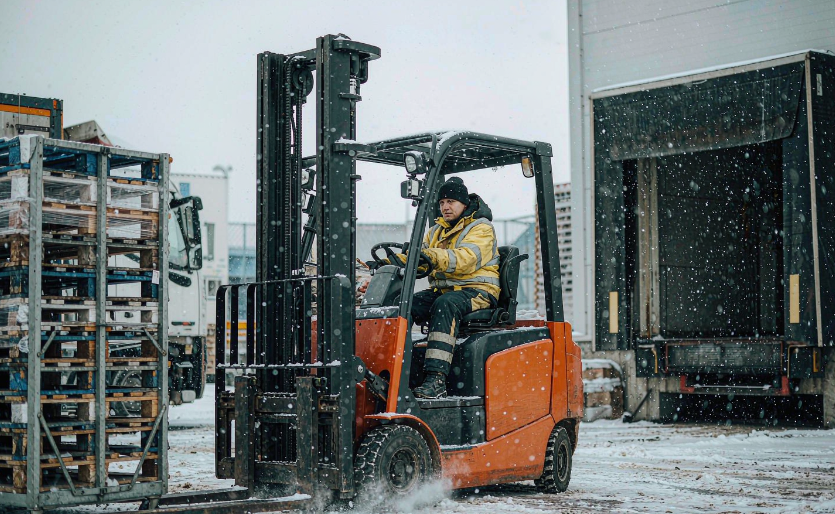
Start preparing your forklift fleet approximately 4–6 weeks before the first expected frost.
This allows enough time to inspect batteries, hydraulic systems, tires, and other components, as well as order replacement parts before winter demand increases.
Continue daily pre-shift inspections throughout winter.
Pay additional attention to pneumatic tire pressure, hydraulic hoses, seals, lights, warning alarms, and visibility equipment.
Weekly inspections of these winter-sensitive components are a useful addition to the manufacturer's regular maintenance schedule.
Use the hydraulic oil viscosity grade specified by the forklift manufacturer for the expected operating temperature.
The correct grade depends on the forklift model, hydraulic system design, and working environment.
Do not select hydraulic oil based solely on ambient temperature.
Get Your Forklift Fleet Ready for Winter with LIFTTOP
Preparing your forklift fleet for winter requires more than routine inspections. Having the correct replacement parts available is equally important for minimizing maintenance delays and unexpected downtime.
LIFTTOP supplies forklift spare parts and industrial battery solutions for major forklift brands, including Toyota, Linde, Komatsu, TCM, Mitsubishi, EP, Hangcha, HELI, and Noblelift.
With 20,000+ SKUs, OEM/ODM support, and dispatch within 48 hours for available stock items, we support forklift parts distributors, maintenance workshops, and equipment operators worldwide.
Need help identifying the right replacement parts?
Send us your forklift model, serial number, or existing part number. Our sales and technical team can help check compatibility and provide a quotation.Contact LIFTTOP for Forklift Spare Parts!
احصل على أحدث العروض من HUAN XIN الميكانيكية والكهربائية

أرسل لنا البريد الإلكتروني
بريد إلكتروني : simon@lifttops.com
عنوان


 IPv6 الشبكة مدعومة


 العربية
 العربية
 English
 français
 русский
 español
 português