There is no universal key that decodes every forklift part number. The reliable method has two stages: first classify the number as OEM-segmented, spec-encoded, or dimension-first; then verify four fields — truck model, voltage/current rating, physical dimensions, and connector or mounting pattern — before ordering. Match at least three of the four fields; a single-field match is only a guess.
Wrong-number orders are one of the most expensive and most preventable mistakes in forklift parts purchasing. A controller comes back because it is 24V and the truck needs 48V. A drive wheel arrives 3 mm too narrow. A "compatible" contactor has the wrong coil voltage. In every case, the buyer matched the part number — but not the part.
This guide walks through the three numbering families you will actually meet, six real catalogue examples from Toyota, Linde, EP, Hangcha and TCM trucks, and a four-step cross-reference method you can run before releasing any purchase order.
A part number is an address, not a specification. It tells you where the part sits in one manufacturer's catalogue. It does not tell you:
That is why experienced buyers cross-reference on attributes, not on the number alone. Treat the number as the search key, and the attributes as the acceptance test.
Nearly every number you will handle falls into one of three families. Identify the family first — it tells you what you can trust straight away and what you must measure.
|
Family |
How to recognise it |
What it usually encodes |
Examples (as published) |
What you must still verify |
|
OEM-segmented |
2–4 dash- or slash-separated segments, brand-specific |
Catalogue position, assembly grouping |
1135-420000-F0, 1115-340000-10-50, ZL10-210000-00 / 0009934064, Z130D750-24A1, DC182B-733, 3513604701 |
Truck model and build year; whether a supersession exists |
|
Spec-encoded |
Alphanumeric string with recognisable ratings inside |
Voltage, current, power, control type |
1244-6661 48V 84V 600A, STARP2624L600PG50S30B 24V 600A, Z130D750-24A1 (24V/750W), DC182B-733 (48V) |
That the voltage/current suits your truck, not just the family |
|
Dimension-first |
The numbers are the specification |
Diameter, width, bore, thickness, fork size |
250×75-80, 25080175, 7040, 34313580, 8.819.214.4mm, 187-8/CL621, 685×1220(PU) |
Which physical axis each figure refers to — dimension order varies between brands |
Two practical notes from this table:
The examples below are taken from published catalogue pages, so you can see the reasoning applied to genuine entries rather than invented ones.
|
Published number |
Truck context stated |
What the number itself confirms |
What it does not confirm |
|
1135-420000-F0 |
EP F4 1.5T electric pallet truck |
A segmented OEM-family number for a hydraulic power unit assembly rated 24V / 500W |
Which F-series build year the truck is; whether the unit is interchangeable with later F-series trucks |
|
ZL10-210000-00 / 0009934064 |
EP F4 electric pallet truck, drive wheel 210×70/83 |
Two numbers describe one part — a truck-side code and a second OEM-style code |
That the two numbers are always sold together, or that either is unique across all EP models |
|
Z130D750-24A1 |
HANGCHA electric forklift, drive motor assembly |
The title carries the electrical rating (24V / 750W) alongside the number |
Whether your truck uses the 24V variant or the higher-voltage version of the same motor |
|
DC182B-733 |
Linde electric forklift contactor |
A segmented OEM number; the listing states 48V |
Coil voltage details, auxiliary contact configuration, mounting pattern |
|
3513604701 |
Linde speed sensor |
A long single-token OEM number |
Which connector type your harness uses |
|
250×75-80 |
BT / Jungheinrich / Crown electric forklifts |
The part is defined by dimensions, not by an OEM code |
Which figure is bore and which is width — confirm against the truck manual |
The lesson from row two is the important one. Dual numbering is common on electric pallet trucks. The ZL10-210000-00 and 0009934064 codes both describe the same EP F4 drive wheel. If you search only one of the two numbers, you will conclude the part is unavailable when it is actually in stock under the other. The same pattern appears on pump units: the 1135-420000-F0 hydraulic power unit for electric pallet trucks and the 1115-340000-10-50 handle assembly both use EP's hyphen-segmented style, so a number that "looks different" may still belong to the same truck family.
The Four-Step Forklift Parts Cross-Reference Method
Run these steps in order, and stop at the first step where the data does not match.
Step 1 — Pin the truck. Record model, series and build year, plus the system the part belongs to (hydraulic, traction, steering, braking, electrical control). A number alone cannot tell you this; the truck plate and the manual can.
Step 2 — Extract every spec the listing already states. Voltage, current, power, capacity, thread or bore size, tooth count, connector type. For example, a 24V / 600A pump controller and a 48V / 84V, 600A separately excited controller look similar in a catalogue photo — and are not interchangeable.
Step 3 — Measure the part you are replacing. Take OD, width and bore for polyurethane drive wheels; thickness and dimensions for carbon brushes; pin count and housing shape for contactors and speed sensors. Photograph the nameplate and the connector before you remove anything.
Step 4 — Match on three of four fields, then confirm lead time. Model context + electrical rating + physical dimensions = a defensible match. Anything less than three matches is a hypothesis to be confirmed with the supplier in writing, ideally with a photo comparison.
Not sure whether an aftermarket equivalent is dimensionally exact? Get a free compatibility check from our parts experts — send the part number, a nameplate photo and your truck serial number, and we will confirm the match before you order.
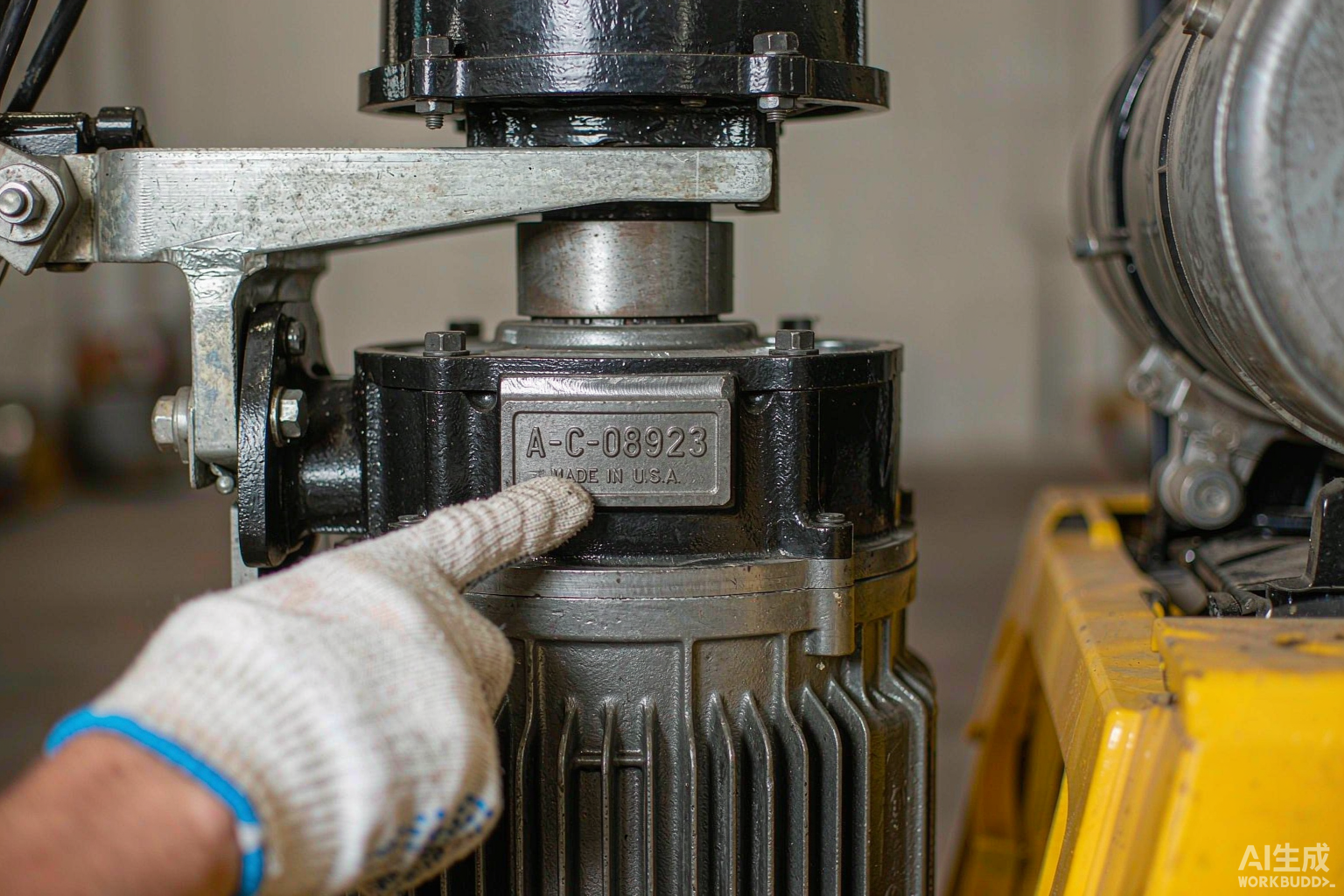
Where Cross-Referencing Forklift Parts Fails Most Often
|
Failure mode |
Why it happens |
How to prevent it |
|
Supersession |
The OEM replaced a number mid-production; both numbers circulate |
Always ask whether the number is current or superseded |
|
Dual numbering |
Electric pallet-truck wheels, handles and pump units carry two numbers |
Search both numbers before concluding "unavailable" |
|
Dimension-only parts |
Wheels, tyres and brushes are named by size, but figure order differs between suppliers |
State the axis order in your RFQ ("OD × width × bore") |
|
Voltage families |
The same controller or contactor family ships in 24V, 48V and 80V versions |
Put the rating in the subject line of your enquiry |
|
Model-year variants |
One truck model can use two different pumps or handles |
Send the truck serial number, not just the model |
Copy this into your purchasing template and complete it before releasing any PO:
Suppliers who publish structured catalogue pages — brand categories, specification fields and OE-number-led product titles — make steps 1 to 4 materially faster, because you can screen candidates before you write the enquiry. LIFTTOP's catalogue is organised by machine brand, covering Toyota, Linde, Komatsu, TCM, EP, Hangcha, HELI and other major forklift brands, with 20,000+ SKUs in stock and shipment within 48 hours.
No. Forklift part numbering is manufacturer-specific and varies even within one brand across product families. Classify the number into a family — OEM-segmented, spec-encoded or dimension-first — then verify the attributes: model context, electrical rating, physical dimensions and connector pattern.
Electric pallet-truck components frequently carry both a truck-side code and a second OEM-style code. Both numbers describe the same physical part, so search both before concluding the part is unavailable. This is common on EP pallet-truck drive wheels, handle assemblies and pump units.
Match on at least three of four fields: truck model context, electrical rating, physical dimensions and connector or mounting pattern. Then ask the supplier for written confirmation that the match is dimensionally exact rather than merely "suitable for".
Voltage. Controllers, contactors and chargers exist in 24V, 48V and higher-voltage families that look identical in catalogue photography. A 24V/600A controller and a 48V/600A controller can share the same housing and connector — and still be incompatible.
They are easier to search and harder to verify, because different suppliers order the dimensions differently. A 250×75-80 wheel and a 25080175 wheel are different parts. Always state the axis order in your enquiry, for example "OD × width × bore".
Send the part number, a photograph of the nameplate, the truck model and serial number, the required electrical rating, and — for wheels, tyres or brushes — measurements with the axis order written out. A photo of the connector prevents most fitment disputes.
The serial number is safer. One truck model can ship with two different pumps, controllers or handle assemblies across production years, so the model alone can point to the wrong variant. The serial number lets the supplier identify the exact build.
Looking for reliable forklift parts? Simply provide your parts list, model number, or part number for a one-stop quote. LiftTop offers over its own brand SKUs and imported parts catalogs, covering major forklift brands such as Toyota, Linde, Komatsu, TCM, EP, and Hangcha. With efficient order processing and global shipping support, we help distributors and parts buyers solve downtime issues.
احصل على أحدث العروض من HUAN XIN الميكانيكية والكهربائية

أرسل لنا البريد الإلكتروني
بريد إلكتروني : simon@lifttops.com
عنوان


 IPv6 الشبكة مدعومة


 العربية
 العربية
 English
 français
 русский
 español
 português