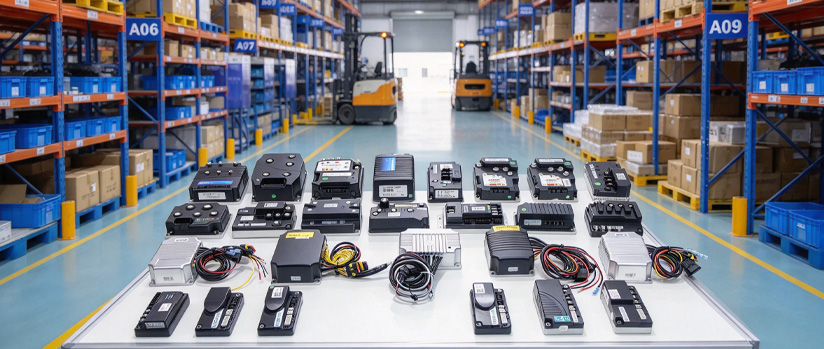
Forklift controller compatibility is determined by five specifications — supply voltage, motor type, current rating, communication protocol, and connector pinout — not by the truck brand alone. The same Toyota or Linde model can use different controllers depending on model year and serial range, so the only reliable match is the controller's own part number and model-plate data. Here is how to cross-reference controllers for Toyota, Linde, Komatsu, and EP forklifts.
Ordering by truck model alone is the most common cause of wrong-part orders. The specifications below remove the guesswork.
5 Key Specifications to Check Before Ordering a Replacement Forklift Controller
1. Supply Voltage and Battery Configuration
Forklift electrical systems commonly operate at 24V, 36V, 48V, 72V, or 80V. The replacement controller must match the nominal voltage of the battery pack and the truck's electrical system.
For trucks with two batteries connected in series, always check the total system voltage rather than the voltage of an individual battery.
When converting from lead-acid to lithium batteries, additional compatibility checks are necessary. The battery management system (BMS) can affect the controller's current limits, protection settings, and fault-handling logic.
2. Motor Type: DC Series, Separately Excited DC, AC Induction, or PMSM
The controller must be designed for the specific motor type used in the forklift. DC series, separately excited DC, AC induction, and permanent magnet synchronous motors (PMSM) require different control methods and drive algorithms.
A controller designed for one motor type cannot automatically replace a unit designed for another. Always confirm the motor specifications before selecting a replacement.
3. Current Rating and Operating Conditions
The controller's current rating must be sufficient for the motor's operating requirements, with an appropriate margin for peak loads.
An undersized controller may overheat, enter thermal derating too frequently, or fail prematurely. When selecting a replacement, consider the truck's actual working conditions, including loaded travel, ramp operation, frequent acceleration, and repeated direction changes.
4. Communication Protocol and Throttle Interface
Forklift controllers typically receive speed commands through one of two interfaces.
Analog Input
A potentiometer or Hall-effect throttle sends an analog signal directly to the controller to regulate motor speed.
CAN Bus Communication
CAN bus enables digital communication between the controller and other truck systems, such as the dashboard, display, and, in some configurations, the battery management system. It is used in many newer forklift models, although the actual configuration depends on the manufacturer, model, and production year.
5. Connector Type, Pinout, and Firmware
Forklift controllers may use connectors from families such as AMP/TE, Deutsch, and Molex. However, connector types, pin counts, and wiring assignments can vary between models and production years.
Even if two controllers have the same voltage and current ratings, differences in connector pinout can prevent direct replacement or cause electrical damage if the wiring is incompatible.
Before ordering, compare the connector layout and pin assignments with the original unit. For controllers that communicate with other truck systems via CAN bus, firmware compatibility and configuration requirements should also be checked.
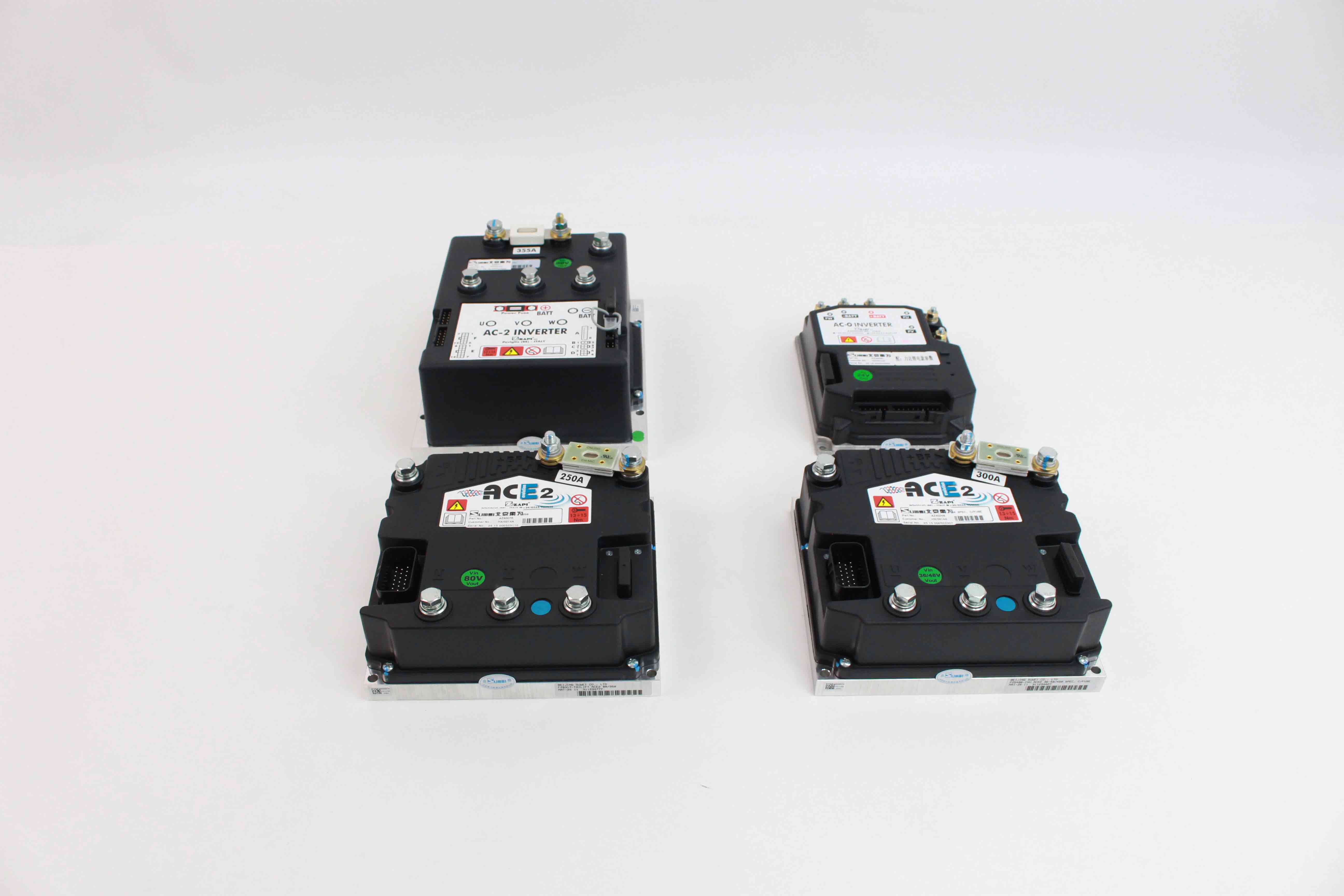
Use the table below as a starting framework, then confirm against the controller's own part number and model plate.
| Brand | Common controller platforms | Key compatibility checks |
|---|---|---|
| Toyota | Mix of ZAPI and Curtis platforms across 8-series electric counterbalance models, plus Toyota-designed controllers with CAN bus on newer trucks | Verify the serial range — the supplier changed by model year; confirm CAN vs. analog; identify motor type (separately excited DC motors are common) |
| Linde | Frequently Linde-designed controllers integrated into the truck's CAN architecture (e.g., 387 and E-series electrics) | CAN capability is mandatory; firmware and calibration must match the truck; connector pinout is often Linde-specific |
| Komatsu | Curtis and ZAPI platforms common on FB/EF-series electric models, depending on production year | Match voltage and current to the motor nameplate; confirm whether traction and pump are separate units |
| EP Equipment | ZAPI, Curtis, and domestic Chinese controllers across electric forklifts and pallet trucks, varying by production year | Confirm motor type (DC series or PMSM on many pallet trucks) and connector standard; check for combined traction/pump units |
Practical notes from the field:
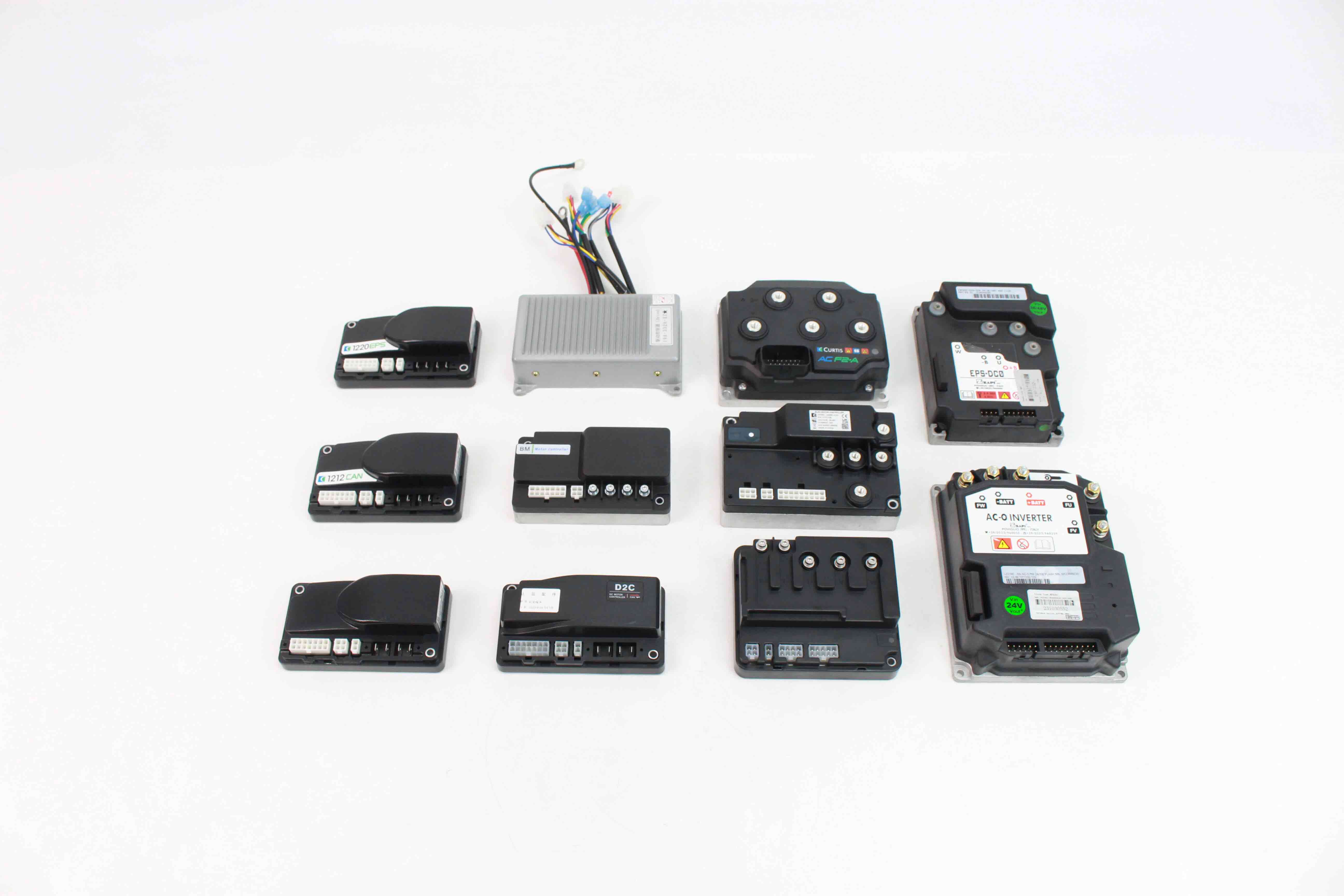
OEM part numbers get superseded, and original controllers are not always available at a reasonable price or lead time. A professional cross-reference matches the original unit's specifications to an aftermarket equivalent built to the same electrical spec. The process works like this:
While troubleshooting, check the components that commonly cause controller-related faults: the forklift drive motor assembly, motor encoder, speed sensor, contactor, and carbon brushes on DC motors. Replacing a controller without checking these often means replacing it twice.
Controller compatibility comes down to data, not guesswork: the part number, the model plate, and the five specifications above. When in doubt, a free compatibility check costs nothing and saves a week of downtime.
Not sure which controller fits your truck? Send us a photo of the model plate or the old part number — our team will run a free compatibility check and confirm the exact match before you order.
Ready to order? Send your parts list with the truck model and serial number, and we will come back with a quote — 20,000+ SKUs, 48-hour dispatch, and full OEM/ODM support for custom requirements. →Request a quote !
احصل على أحدث العروض من HUAN XIN الميكانيكية والكهربائية

أرسل لنا البريد الإلكتروني
بريد إلكتروني : simon@lifttops.com
عنوان


 IPv6 الشبكة مدعومة


 العربية
 العربية
 English
 français
 русский
 español
 português