
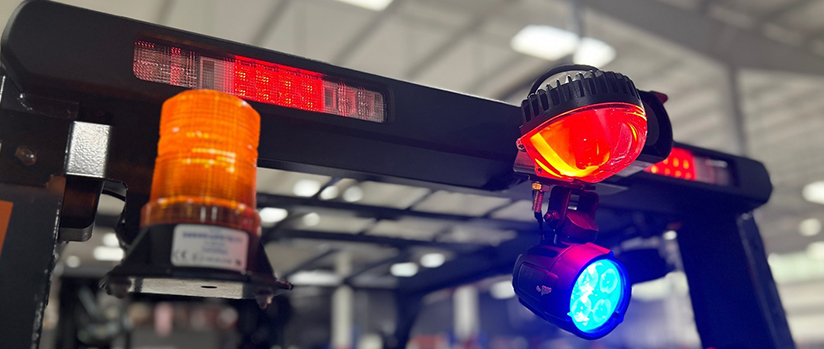
أنواع مصابيح الرافعات الشوكية الشائعة واستخداماتها
1. مصابيح العمل
مصابيح العمل هي الإضاءة الأساسية في الرافعة الشوكية. تُسلّط مباشرة إلى الأمام لمساعدة المشغل على رؤية المنصات، والحمولات، والفوضى على الأرض، والرفوف بوضوح عند التحميل أو التفريغ أو التكديس.
أين تُستخدم: المستودعات الداخلية العامة، الممرات القياسية، العمل الداخلي خلال النهار.
ما يجب معرفته: مصابيح العمل LED هي الخيار الأفضل حالياً. تستهلك طاقة أقل، تدوم لفترة طويلة، ساطعة، وتتحمل الاهتزاز جيداً — مثالية للرافعات الشوكية.
2. مصابيح التحذير من السلامة
غالباً ما تُسمى مصابيح سلامة المشاة. في المناطق المزدحمة حيث يتشارك الأشخاص والرافعات الشوكية المساحة، فهي ضرورية. تُسقط بقعة مرئية على الأرض لتحذير المشاة والسائقين الآخرين من اقتراب الرافعة الشوكية.
مصابيح المنطقة الزرقاء أو الحمراء: تُسقط دائرة أو خطاً ساطعاً باللون الأزرق أو الأحمر على الأرض على بعد بضعة أقدام أمام أو بجانب الرافعة الشوكية. يمكن للناس رؤيتها من مسافة بعيدة. رائعة للمستودعات المزدحمة، والتقاطعات، ونقاط الرؤية المحدودة.
مصابيح الوميض: مصابيح وامضة تُثبت أعلى الرافعة الشوكية. يسهل ملاحظتها في الأماكن الكبيرة أو الصاخبة. تُستخدم في الخارج، أو في المناطق التي تحتوي على الكثير من المعدات، أو عندما تكون الرؤية منخفضة.
3. المصابيح الخلفية ومصابيح الرجوع للخلف
عندما تتحرك الرافعة الشوكية إلى الخلف، تضيء مصابيح الرجوع المنطقة خلفها. المصابيح الخلفية ومصابيح الرجوع للخلف ضرورية في الممرات الضيقة، ومناطق التخزين الكثيفة، وأي عمل يتضمن الرجوع المتكرر.
تُضيء مصابيح الرجوع الخلفية الرؤية الخلفية فوراً، بينما تُظهر المصابيح الخلفية المدمجة أيضاً محيط الرافعة الشوكية حتى تتمكن المركبات الأخرى من رؤية موقعها.
4. مصابيح داخل الكابينة
الإضاءة الداخلية داخل الكابينة تجعل من السهل قراءة الأوراق، ورؤية لوحة التحكم، والعثور على الأزرار في الظلام. لا تؤثر على رؤية القيادة وتجعل التشغيل أكثر راحة.
اختيار الإضاءة المناسبة لبيئة عملك
المستودعات الداخلية
معظم المستودعات القياسية ذات ارتفاع سقف وإضاءة عادية: استخدم مصابيح أمامية LED + ضوء منطقة أمان أزرق. هذا يغطي الإضاءة الأساسية والتحذير للمشاة، وهو كل ما تحتاجه للعمل اليومي.
الممرات الضيقة ومساحات التخزين المدمجة
أضف مصابيح الرجوع للخلف ومصابيح تحديد الجوانب. وقت الاستجابة قصير في المساحات الضيقة، لذا فإن الرؤية الكاملة وتحديد الموقع بوضوح مهمان جداً.
بيئات الإضاءة المنخفضة والظلام (الأقبية، التخزين البارد)
قم بالترقية إلى مصابيح عمل LED عالية اللومن وقم بتركيب مصابيح تحذير مزدوجة وامضة. الظروف الباردة والمظلمة تقلل من الإضاءة الطبيعية، لذا تحتاج إلى سطوع أكبر وإشارات تحذير أقوى.
العمل الخارجي (الساحات المفتوحة، أرصفة التحميل)
تتغير ظروف الإضاءة في الخارج كثيراً — مشمس، غائم، شفق، ليل. استخدم مصابيح عمل مقاومة للماء عالية السطوع + مصباح وامض مثبت في الأعلى. تأكد من أن جميع المصابيح لها تصنيف جيد لمقاومة الماء والغبار للتعامل مع الرياح والمطر والغبار.
النقاط الأساسية عند اختيار مصابيح الرافعة الشوكية
اختر مصابيح LED
مقارنة بالمصابيح الهالوجين القديمة، فإن مصابيح LED أكثر متانة، وأكثر كفاءة في استهلاك الطاقة، وتتحمل الاهتزاز بشكل أفضل. أصبحت المعيار للرافعات الشوكية الصناعية الحديثة.
تحقق من المتانة وتصنيف الحماية
تعمل المركبات الصناعية في ظروف قاسية. اختر مصابيح بتصنيف لا يقل عن IP65 (محكمة ضد الغبار ومحمية ضد رذاذ الماء منخفض الضغط)، حتى تتمكن من تحمل الغبار والرطوبة وتغيرات درجة الحرارة.
اتباع لوائح السلامة المحلية
لدى العديد من الأماكن قواعد واضحة حول مصابيح التحذير ومعايير الإضاءة على الرافعات الشوكية. تأكد من أن المصابيح التي تختارها تلتزم بقوانين السلامة الصناعية المحلية — وإلا قد تواجه مشكلات في الامتثال.
مطابقة طراز الرافعة الشوكية ومساحة التركيب
أنواع مختلفة من الرافعات الشوكية — الموازنة، رافعات المنصات، رافعات الوصول — لها أماكن مختلفة لتركيب المصابيح. تحقق من الحجم ونوع التثبيت قبل الشراء.
الخاتمة
يمكن لنظام الإضاءة المناسب أن يحسن بشكل كبير من سلامة الرافعات الشوكية، والرؤية، وكفاءة التشغيل. بينما تبقى المصابيح الأمامية القياسية ضرورية، فإن إضاءة السلامة الحديثة مثل الأضواء الزرقاء، وأضواء مناطق الخطر الحمراء، وأضواء التحذير الدوارة، ومصابيح LED للعمل توفر طبقات إضافية من الحماية لكل من المشغلين والمشاة.
مع ازدياد انشغال المستودعات واستمرار ارتفاع متطلبات السلامة، فإن الاستثمار في إضاءة رافعات شوكية عالية الجودة هو أحد أكثر الطرق فعالية لتقليل الحوادث وتحسين إنتاجية مكان العمل.
إذا كنت تبحث عن حلول إضاءة للرافعات الشوكية، أو مصابيح تحذير، أو مصابيح عمل LED، أو قواطع، أو وحدات تحكم، أو حساسات، أو عجلات، أو أي قطع غيار بديلة أخرى، يمكن لفريقنا مساعدتك في العثور على المنتجات المناسبة لمعداتك وبيئة التشغيل لديك.
اتصل بنا اليوم من أجل قطع غيار الرافعات الشوكية وحلول السلامة الاحترافية.
احصل على أحدث العروض من HUAN XIN الميكانيكية والكهربائية

أرسل لنا البريد الإلكتروني
بريد إلكتروني : simon@lifttops.com
عنوان


 IPv6 الشبكة مدعومة


 العربية
 العربية
 English
 français
 русский
 español
 português