
مع التطور السريع للوجستيات سلسلة التبريد، والتجارة الإلكترونية للأغذية الطازجة، وتخزين الأدوية، أصبحت مرافق التخزين المبرد (التي تعمل عند درجات حرارة -20 درجة مئوية أو حتى -30 درجة مئوية) تطبيقات بالغة الأهمية للرافعات الشوكية ومعدات التخزين. في مثل هذه البيئات شديدة البرودة، غالبًا ما ينخفض أداء وموثوقية بطاريات الرصاص الحمضية التقليدية بشكل ملحوظ، بينما أصبحت بطاريات الليثيوم (وخاصة فوسفات حديد الليثيوم، LiFePO₄) الحل الأمثل لتوفير الطاقة لعمليات التخزين المبرد.
تدعم بطاريات الليثيوم عمليات التشغيل المتواصلة على مدار عدة نوبات دون الحاجة إلى استبدالها بشكل متكرر، مما يلغي تكاليف الاستبدال المرتبطة بها. ويمكن استغلال فترات الراحة أو فترات التوقف لإعادة شحن البطاريات بسرعة من خلال جلسات شحن قصيرة. لم يعد الشحن مقتصراً على فترة زمنية واحدة، بل أصبح موزعاً على مدار اليوم، مما يوفر وقتاً ثميناً في سير العمليات التشغيلية. علاوة على ذلك، تساهم إدارة الشحن الذكية في تجنب فترات ذروة الطلب على الكهرباء، وبالتالي منع ارتفاع تكاليفها.
تساهم بطاريات الليثيوم أيضًا في خفض استهلاك الطاقة وتقليل انبعاثات الكربون. فهي تتميز بفقدان ضئيل جدًا للطاقة المخزنة، حيث تصل كفاءتها إلى أكثر من 95%. كما أن وزنها الخفيف يقلل من الوزن الإجمالي للمعدات، مما يؤدي إلى خفض استهلاك الطاقة بنسبة 21% تقريبًا. ويؤثر انخفاض الوزن الإجمالي إيجابًا على تقليل تآكل المكونات، مثل العجلات. ومن المزايا المهمة الأخرى للمستخدمين أن الرافعات الشوكية الصناعية التي تعمل ببطاريات الليثيوم لا تتأثر بانخفاض درجات الحرارة، على عكس بطاريات الرصاص الحمضية. ويظل إمداد الطاقة مستقرًا ويتعافى بسرعة خلال فترات الراحة.
لذا، تُعدّ تقنية بطاريات الليثيوم مناسبةً للغاية للعمليات الحساسة للوقت، مثل الخدمات اللوجستية للأغذية. يُصنّف قطاع الأغذية عادةً المنتجات إلى جافة وطازجة ومجمدة: تُخزّن المنتجات الجافة في درجة حرارة الغرفة؛ أما المنتجات الطازجة، مثل منتجات الألبان والنقانق واللحوم والأسماك والفواكه والخضراوات، فتتطلب تخزينًا مضبوط الحرارة بين 2 و8 درجات مئوية، وتحتاج إلى سرعة في التوريد نظرًا لقصر مدة صلاحيتها؛ بينما يجب تخزين الأطعمة المجمدة والآيس كريم عند درجة حرارة -18 درجة مئوية أو حتى أقل من ذلك.
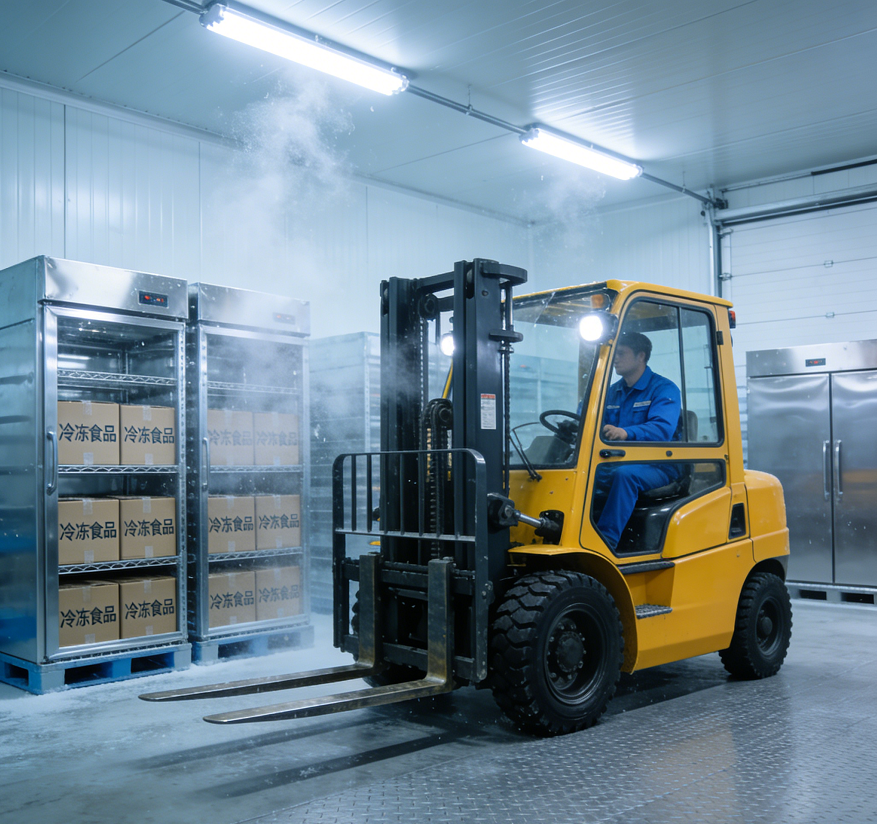
لا تؤثر درجات الحرارة المنخفضة وفروق درجات الحرارة على الرافعات الشوكية فحسب، بل تؤثر أيضًا بشكل مباشر على أداء البطارية. تُسرّع درجات الحرارة المنخفضة من تفريغ البطارية، مما يؤدي إلى انخفاض الطاقة الناتجة. وبشكل عام، كلما انخفضت درجة الحرارة، قلت سعة البطارية. على سبيل المثال، تصل بطاريات الرصاص الحمضية إلى أقصى سعة لها عند درجة حرارة محلولها الإلكتروليتي 30 درجة مئوية، بينما تنخفض سعتها القابلة للاستخدام إلى 55% عند -20 درجة مئوية. في بيئات درجات الحرارة المنخفضة، تتطلب بطاريات الرصاص الحمضية أوقات شحن أطول بكثير نظرًا لانخفاض قدرتها على امتصاص الطاقة، وقد يصبح الشحن مستحيلاً حتى في درجات حرارة أقل من درجة التجمد. ونتيجة لذلك، يجب عادةً تخزين بطاريات الرصاص الحمضية وشحنها في درجات حرارة الغرفة. بالنسبة لتطبيقات التجميد العميق، غالبًا ما يكون من الضروري تزويد كل وحدة ببطاريتين قابلتين للتبديل، مما يعني الحاجة إلى ثلاث بطاريات رصاص حمضية لكل جهاز للتناوب. بالإضافة إلى ذلك، تتطلب بطاريات الرصاص الحمضية صيانة وعناية أكبر في تطبيقات درجات الحرارة المنخفضة.
في ظروف درجات الحرارة المنخفضة، يتباطأ معدل التفاعل الكيميائي لبطاريات الرصاص الحمضية بشكل ملحوظ، مما قد يؤدي إلى انخفاض سعتها الفعالة بنسبة تتراوح بين 30% و50%. وقد يتسبب ذلك في مشاكل مثل نقص الطاقة وبطء الرفع في الرافعات الشوكية. في المقابل، تحافظ بطاريات الليثيوم على استقرار جهد الخرج وتُظهر انخفاضًا أقل في الطاقة في بيئات درجات الحرارة المنخفضة، مما يضمن أداءً أكثر موثوقية أثناء بدء التشغيل والتسارع والتشغيل بكامل الحمولة. وهذا يسمح للرافعات الشوكية بالعمل بكفاءة في مرافق التخزين البارد، مما يُحسّن الإنتاجية الإجمالية بشكل كبير.
ثانيًا، تتميز بطاريات الليثيوم بتصميم محكم الإغلاق تمامًا، ولا تحتوي على إلكتروليت سائل متدفق بحرية. وهذا يزيل بشكل جذري المخاطر الشائعة في بطاريات الرصاص الحمضية في درجات الحرارة المنخفضة، مثل تجمد الإلكتروليت وتمدده وتسربه، مما يعزز بشكل كبير السلامة والموثوقية للاستخدام طويل الأمد في بيئات التخزين الباردة.
بالإضافة إلى، تدعم بطاريات الليثيوم الشحن السريع والشحن أثناء فترات الراحة (أي إعادة الشحن أثناء فترات الراحة). مما يلغي الحاجة إلى استبدال البطاريات أو تخصيص غرف لها. وهذا يُمكّن من تشغيل الرافعات الشوكية بشكل متواصل على مدار 24 ساعة، مما يجعلها مناسبة بشكل خاص لسيناريوهات الخدمات اللوجستية لسلسلة التبريد عالية الكثافة والحساسة للوقت.
من ناحية الصيانة، تُعتبر بطاريات الليثيوم خالية من الصيانة، فلا تتطلب إضافة الماء أو شحنها لمعادلة الشحن، كما أنها لا تُنتج أي تآكل أو رذاذ حمضي. وهذا لا يُقلل فقط من صعوبة الصيانة ومخاطرها في البيئات ذات درجات الحرارة المنخفضة، بل يُخفض أيضاً بشكل كبير تكاليف العمالة والمخاطر التشغيلية.
على الرغم من أن بطاريات الليثيوم تتطلب استثمارًا أوليًا أعلى، إلا أن عمرها الافتراضي قد يصل إلى 3000 إلى 5000 دورة شحن، متجاوزًا بكثير عمر بطاريات الرصاص الحمضية الذي يتراوح عادةً بين 800 و1500 دورة. وبفضل انخفاض معدل استبدالها، وانخفاض تكاليف صيانتها، وزيادة كفاءة استخدام المعدات، توفر بطاريات الليثيوم تكلفة إجمالية للملكية (TCO) أكثر جدوى على مدار دورة حياتها في تطبيقات التخزين البارد.
تُجهز بطاريات الليثيوم الحديثة عادةً بأنظمة إدارة بطاريات متطورة، قادرة على مراقبة درجة حرارة البطارية، والجهد، والتيار، وحالة الشحن/التفريغ في الوقت الفعلي. وعندما تنخفض درجات الحرارة إلى مستويات منخفضة للغاية، يمكن للنظام تقييد الشحن تلقائيًا أو تفعيل وظائف التسخين، مما يضمن تشغيلًا آمنًا ومستقرًا في بيئات درجات الحرارة المنخفضة للغاية.
من حيث كفاءة الطاقة، تحقق بطاريات الليثيوم عادةً معدلات تحويل طاقة تتجاوز 95%، متجاوزة بذلك بطاريات الرصاص الحمضية بكثير. وهذا لا يساعد فقط في تقليل تكاليف الكهرباء وتقليل هدر الحرارة، بل يعزز أيضًا كفاءة استخدام الطاقة الإجمالية لمرافق التخزين البارد.
في ظل ظروف الاستخدام القاسية لمستودعات التبريد، تتفوق بطاريات الليثيوم، بفضل أدائها الممتاز في درجات الحرارة المنخفضة، وكفاءة شحنها العالية، وعمرها التشغيلي الطويل، وضمانات السلامة الموثوقة، على بطاريات الرصاص الحمضية التقليدية، وأصبحت المحرك الأساسي لتطوير سلسلة التبريد اللوجستية بكفاءة وذكاء. ومع التطورات المستمرة في تكنولوجيا المواد والانخفاض المطرد في تكاليف التصنيع، سيزداد استخدام بطاريات الليثيوم في بيئات التبريد، مما يوفر دعمًا قويًا للطاقة في مجالات حيوية مثل سلامة الغذاء والرعاية الصحية.
احصل على أحدث العروض من HUAN XIN الميكانيكية والكهربائية

أرسل لنا البريد الإلكتروني
بريد إلكتروني : simon@lifttops.com
عنوان


 IPv6 الشبكة مدعومة


 العربية
 العربية
 English
 français
 русский
 español
 português